Or, how music helped define my relationship with my father
My first CD player was a Christmas gift from my parents, in my sophomore year of college. It came with four brand-new CDs, because what’s the point of having the player if you’ve got nothing to play on it? I was big into the college radio sound (look it up if you’re too young to know what that is) back then, so naturally the CDs were … not that: recordings of Vladimir Horowitz playing Schubert and Chopin, someone else performing Rachmaninoff, Vivaldi’s Four Seasons, and a collection of Aaron Copeland symphonies.
I knew right away that while the gift had come from my parents, my dad had picked the actual CDs. They were his taste, not mine, and his choice to go this route rather than just throw in a gift certificate from Sensuous Sound Systems or Camelot Music—so I could get something I might actually choose for myself—was typical.¹ I suppose he might have meant it as some sort of olive branch, casting back to the days when I was young and we shared the same taste in music,²but if you knew my dad, you’d know how implausible that is. Dad didn’t do nostalgia.
He knew a lot about art, music (mostly classical, jazz, and the Beatles), and literature, and I’m certain he’s where I got my appreciation for the humanities. He couldn’t play a lick of music himself (though both his sons could; my brother is a monster bass player), but he was a gifted artist and designer, and he was my first influence as a writer. I soaked up as much of what he knew as I could.
Which meant that in elementary school, I was the kid the other kids made fun of for not knowing even the most basic facts about current popular music. For example, I was once relentlessly hazed during recess because I couldn’t name the band who sang “Tainted Love.” I’d heard the song, somewhere, but I didn’t think much about it beyond simple recognition. It didn’t help that I also knew far more about classical music than any nine-year-old should have. But my music teachers were all suitably impressed, which also did nothing to help my standing in the schoolyard.
When I was ten, I decided it was time to do what I could about my low position in the fourth-grade hierarchy. I began listening to WRIF, Detroit’s album-oriented rock station, the one my uncles and my counselors at summer camp all listened to. One weekend, my grandmother took my brother and me to the mall to go shopping, which basically meant he and I got to pick out something for ourselves and she’d buy it for us, virtually no questions asked. Until then, I usually went with a new Star Wars figure. But this time, I found the music section of Hudson’s Department Store and grabbed a copy of Freeze Frame by the J. Geils Band. I don’t know why I picked that one specifically; I’m honestly not sure I’d even heard it at that point. It was probably because this was one of the titles I’d overheard my classmates talking about.
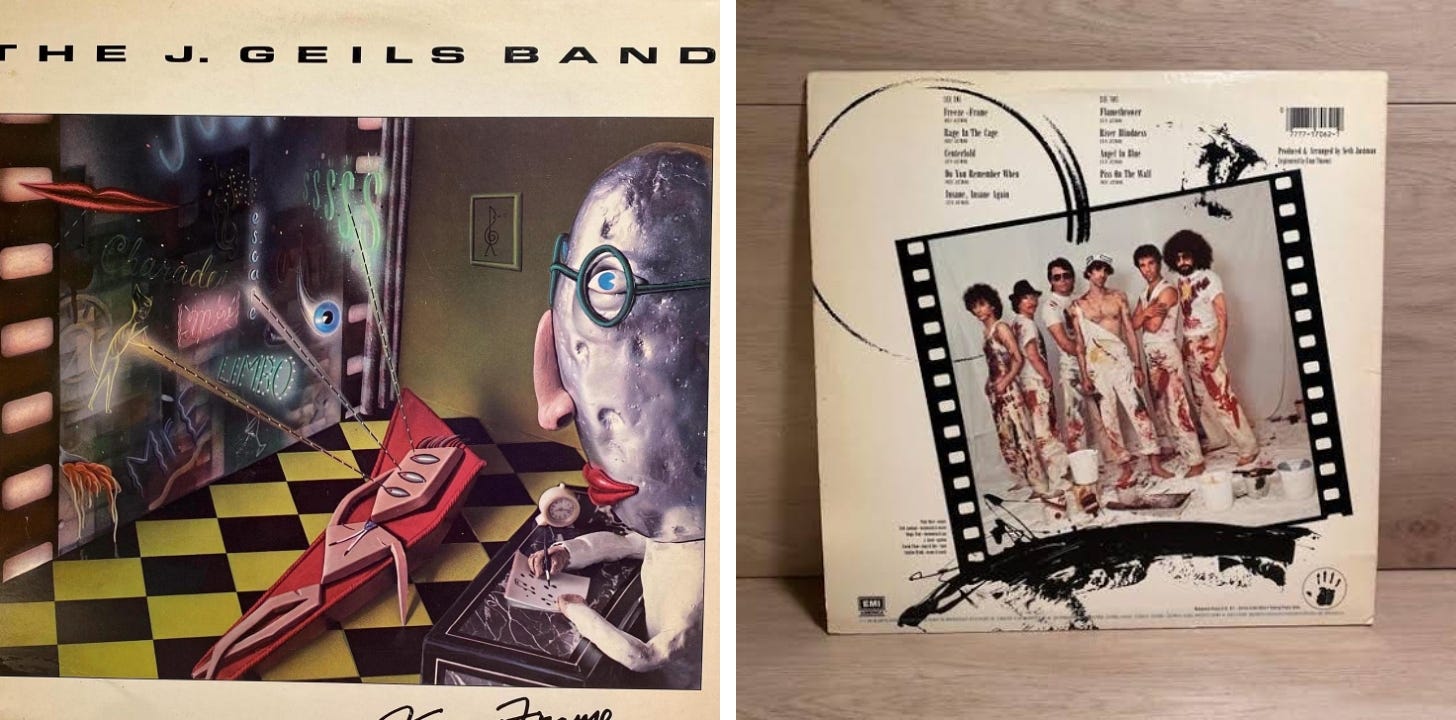
When I came home that Sunday and my dad saw what I’d picked out … I remember the way his face fell, taking on a look of disappointment that was already familiar to me, and that I’d see a lot more of in the coming years until I got old enough (fourteen) for it to give way to one of weary contempt. I didn’t understand at the time that he probably recognized that moment for what it was, the one where his firstborn begins to pull away.
It is, of course, a natural thing for a child to reject his parents’ tastes and start trying to figure out what he likes for himself. I don’t have kids myself, but I can imagine how it might be difficult as a parent to not take it personally, as a rejection of the things you love and that you’ve tried to get them to love too.
However he took it, our relationship changed after that. I know now that it wasn’t as simple a matter as me buying a non-classical album, but the shift was sudden and stark. Considering just how irritating the album’s smash hit single was—“Centerfold” is by far the worst song on it, a strong contender for most annoying song of a decade that shat them out like no other; the record’s other big chart hit isn’t much better—I can’t really blame him for not even considering listening to it, even if only to find out what his kid is getting into on his own.
Would he have liked it if he had listened to it?³ Highly unlikely; at best, he might have appreciated some things about it. There are a handful of tracks on here (“Rage in the Cage;” “Insane Insane Again;” “River Blindness”) that are surprisingly experimental, dense and complex, which is a characteristic he appreciated in classical music (the man did love his Mahler symphonies). And he wasn’t opposed to synthesizer-based music: he played the hell out of Miles Davis’s Tutu, but Miles was in a class of his own, miles above Peter Wolf and company.
I do think he could have liked “Piss On The Wall,” as it feels like a callback to the 1950s and ‘60s rock ‘n’ roll he could relate to. And for some reason, something about it always makes me think of Frank Zappa, who my dad seemed to at least respect, even if he didn’t really listen to him.
My dad and I still had some overlap in the Venn Diagram of our musical tastes. Paul Simon’s Graceland album, which still reminds me of him every time I listen to it. The aforementioned Tutu. Ahmad Jamal’s Crystal. Late-period Beatles. (I was the only one in the house who did not go all-in for the soundtrack to The Big Chill.) Then a couple years later I discovered metal and became a headbanger with a mullet and we had almost nothing productive to say to each other for a few years—but that’s beyond the scope of this blog. Maybe I’ll write more about that another time.⁴
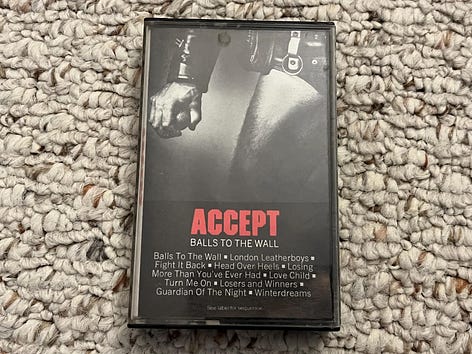
He did eventually come to trust my taste in music, but on his terms (everything was always on his terms), and I had to earn that. Which I did by bringing him music he may not have heard of but that I thought he would enjoy. Most of the time, I got it right.
For example, he liked The Mix-Up by the Beastie Boys, which I gave him for Father’s Day one year. It’s nothing like the music the Beasties are famous for: this one is all stripped-down acid jazz instrumentals. “You can’t give Dad a Beastie Boys CD,” my brother said when I told him what I’d bought. “Why would you even think you could do that?” But Dad liked it. He listened to it a lot, my mother said, and then he was done with it and put it away. That’s how he was with things.
I don’t fool myself by thinking that if I’d never brought home a copy of Freeze Frame, we’d have had a better relationship; not even the kind you’d see in TV sitcoms of the day, but something more normal, like what I saw between a lot of my friends and their fathers. My dad was who he was, and I wasn’t a carbon copy of him. If it hadn’t been that specific thing, it would have been something else.
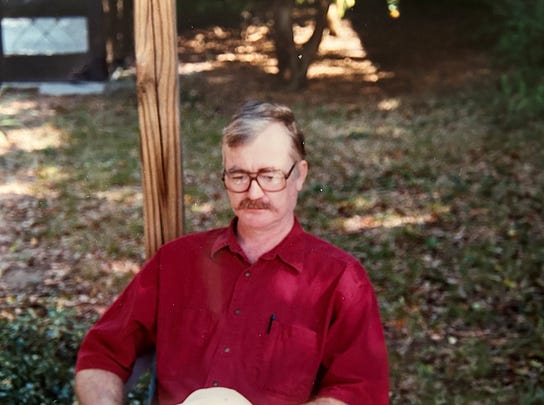
Today would have been his 80th birthday. It’s the first one since his death earlier this year. I miss him, of course, despite our complicated relationship (which did improve, with time and distance). Also, I regret the missed opportunity to have a more or less normal relationship with the only father I’ll ever have. But as I said, he was who he was, which means that that was likely never on the table at all.
And as for the four CDs he chose for me back in 1990, I still have three of them.⁵ The Vladimir Horowitz is a particular favorite. I told him that a few years back. He was pleased.
1 In fact, it was the stated policy of my parents never to gift me music that I specifically asked for, or that I might have actually wanted. No, I don’t understand it either.
2. The word “shared” is doing a lot of work here: it’s more like, Dad liked it, I heard it a lot at home and, at seven years old, lacked the resources to develop my own musical taste, so his just became mine by default.
3. I’m sure his response would be that he had listened to it, repeatedly, against his will. But is hearing it through a closed bedroom door really listening to it? Okay, fine, maybe for an Anthrax record it’s the same thing, but that phase came later.
4. You know what they say: Men will literally keep writing about their fathers until the sun burns out instead of just going to therapy.
5. I left the Rachmaninoff with his CD collection, as collateral for borrowing his copy of Live at Blues Alley by Wynton Marsalis, which I still have.

